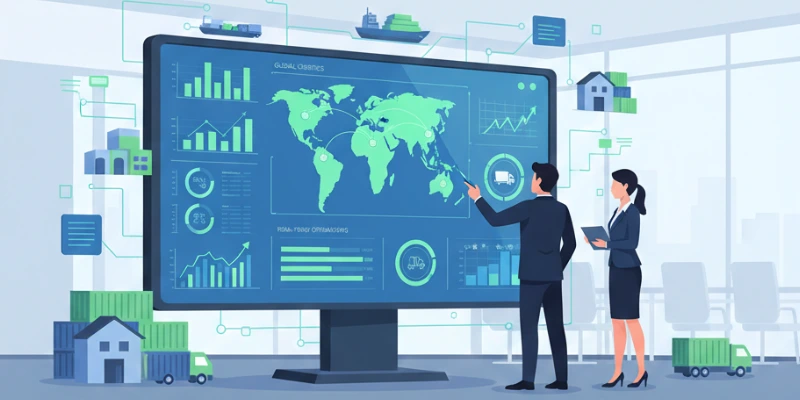
For companies looking to stay competitive in ever-changing industries, supply chain optimization has become crucial. Companies today deal with fluctuating demand, global suppliers, and rising customer expectations. Analytics helps organizations turn raw data into meaningful insights that improve planning and execution.
By using data-driven strategies, businesses can reduce waste, improve service levels, and strengthen profitability. Professionals who want to build expertise in this domain can consider enrolling in the Data Analyst Course in Trivandrum at FITA Academy to gain practical knowledge that supports real-world supply chain decisions.
Improving Demand Forecasting
Precise demand prediction is a vital component of supply chain enhancement. Analytics uses historical sales data, seasonal patterns, and market indicators to predict future demand with greater precision. This helps companies avoid overstocking and stockouts. Better forecasts also support smoother production schedules and lower storage costs.
Advanced forecasting models identify trends that may not be visible through manual analysis. Companies can easily adjust to changes in customer behavior. When demand is predictable, procurement and distribution processes become more efficient. This results in better resource allocation and improved customer satisfaction.
Enhancing Inventory Management
Inventory management often determines whether a supply chain runs efficiently or faces delays. Analytics provides clear visibility into stock levels across warehouses and distribution centers. Real-time dashboards help managers monitor inventory turnover, safety stock levels, and reorder points.
With the help of predictive insights, companies can determine the optimal quantity of goods to maintain. This reduces carrying costs while ensuring product availability. Data-driven inventory planning also minimizes losses due to obsolescence. Those interested in mastering such analytical techniques can take the next step by signing up for a Data Analytics Course in Kochi to strengthen their ability to manage complex inventory systems effectively.
Streamlining Logistics and Transportation
Transportation and logistics involve multiple variables such as routes, fuel costs, delivery timelines, and carrier performance. Analytics helps businesses evaluate these factors to improve efficiency. Route optimization models identify the fastest and most cost-effective paths for delivery. This reduces fuel consumption and improves on-time performance.
Performance analytics also measures supplier and carrier reliability. Companies can use this data to negotiate better contracts and build stronger partnerships. Real time tracking systems further enhance visibility across the supply chain. When logistics operations are supported by data insights, organizations can reduce delays and improve overall service quality.
Strengthening Risk Management
Supply chains face multiple risks such as disruptions from suppliers, natural disasters, and unexpected changes in demand. Analytics enables proactive risk identification through continuous monitoring of key indicators. Scenario analysis helps companies evaluate the impact of potential disruptions before they occur.
By analyzing supplier performance and geographic data, businesses can diversify sourcing strategies. Predictive models also support contingency planning. This ensures that alternative suppliers or routes are ready when needed. As a result, companies build resilient supply chains that can adapt to uncertainty without major losses.
Driving Continuous Improvement
Analytics not only solves immediate problems but also supports long-term improvement. Performance metrics such as order fulfillment rates, lead times, and return rates provide measurable insights. Managers can identify bottlenecks and implement targeted improvements.
Data driven reviews encourage a culture of accountability and transparency. Teams can track progress against clear performance benchmarks. Over time, small incremental changes lead to significant gains in efficiency and profitability. For individuals aiming to contribute to such transformation initiatives, enrolling in a Data Analyst Course in Jaipur can help develop the analytical mindset required to drive meaningful supply chain improvements in their organizations.
Also check: Building Strong Fundamentals in Data Analytics Before Tools