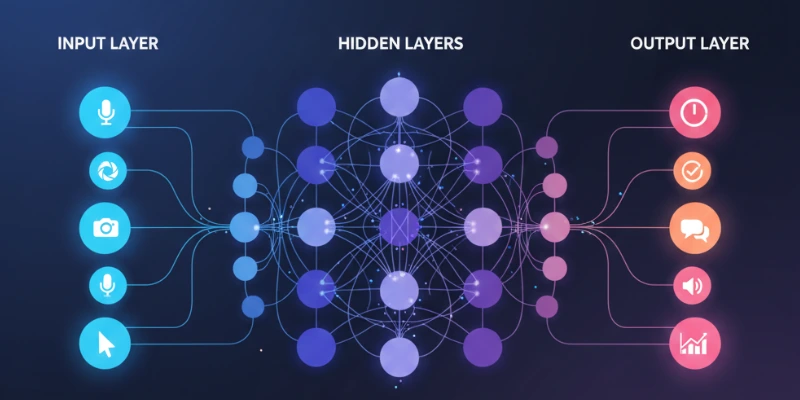
A neural network is a tool that learns patterns in data and uses those patterns to make predictions. At the simplest level, it tries to answer a question, which could involve identifying an image, predicting a number, or deciding between choices. The network learns by adjusting itself whenever it makes a mistake, improving over time at recognizing different inputs. If you are interested in acquiring practical knowledge on such topics, enrolling in a Data Science Course in Trivandrum at FITA Academy can help you understand neural networks and other core data science concepts effectively.
Why the Word Network Makes Sense
The idea of a network becomes clear if you imagine many small decision points connected together. Each decision point makes a small judgment based on information it receives. One point alone cannot understand much. When many points work together, they can understand complex ideas. These points are arranged in layers that pass information forward. Each layer discovers details that the previous layer could not see on its own.
How a Neural Network Learns From Examples
A neural network learns by observing many examples. At the beginning it guesses randomly. After each guess, it checks how far the guess is from the correct answer. It then adjusts its internal settings so future guesses move closer to the truth. With enough examples, these small adjustments gradually shape the network into a reliable decision maker.
This learning process is similar to how someone becomes skilled by practicing the same task repeatedly. If you want to gain hands-on experience with neural networks and other data science concepts, taking a Data Science Course in Kochi can provide practical guidance and real-world projects.
Why Layers Help the Network Understand
Layers help the network break a problem into steps. The first layer notices simple details such as shapes, edges, or changes in values. The next layers combine those details into bigger ideas. Eventually the deeper layers form a complete understanding of the pattern. This layered approach allows the network to move from basic features to complex concepts. It works well because real world information also has structure that builds from simple parts to advanced patterns.
The Role of Weights and Signals
Inside the network every connection has a weight. A weight controls how strongly one piece of information influences the next. Larger weights mean stronger influence while smaller weights mean weaker influence. When an input moves through the network, these weights guide how the information flows.
Learning changes the weights so the network focuses on helpful signals and ignores unhelpful ones. To gain practical knowledge on how neural networks work and understand these concepts in depth, joining a Data Science Course in Pune can provide hands-on training and real-world experience.
Why Neural Networks are Powerful
Neural networks are effective because they have the ability to learn from examples without requiring specific guidelines created by humans. Instead of telling the network how to solve the task, we show it what correct answers look like. It figures out the rules on its own through repeated learning. This ability makes neural networks useful for images, audio, text, and many other types of data that do not follow simple instructions.
The intuition behind neural networks becomes much clearer when you view them as systems that learn from practice. They take in examples, adjust themselves, and slowly build understanding through connected layers of simple decisions. By combining many small judgments, they can uncover rich patterns that are difficult for humans to describe in exact rules.
Neural networks do not rely on magic. They rely on repetition, adjustments, and cooperation between many small parts that work together to recognize patterns in data. To gain a deeper understanding and hands-on experience with these concepts, enrolling in a Data Science Course in Jaipur can help you learn neural networks and other core data science techniques effectively.
Also check: Data Cleaning 101: Why It Matters More Than You Think